Diet / Toxic Overload
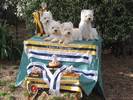
Photo: Celticbrae Jake Iam 'Otis"
owned and loved by Belinda and Marcus, captured here
teaching Marcus how to feed treaties through a hoop!
TOXIC OVERLOAD & SKIN PROBLEMS
Our Westies may become overwhelmed by the massive amounts of pollutants that easily find their way into their body via commercial pet food, medical preparations and pesticides such as flea treatments, vaccinations and worming tablets. The body although design to rid itself of foreign chemicals, may not be able to cope with the barrage of pollinates in today's environment. Chemicals and toxins have effects on an animal as whole both mentally and physically this includes symptoms of fatigue, irritability, depression, and aggression. Along with halitosis, allergic reactions such as scratching, and paw licking also skin disorders such as eczema, hot spots, inflamed skin, and hair loss. Toxins also contribute to gastrointestinal and/or cardiovascular irregularities, auto-immune diseases, inflammatory and rheumatoid arthritis, and a variety of cancers. Because the skin is an organ that is highly visible, disorders are readily detected during an examination. A excessive build up of toxins causes the skin to become inflamed and cause a number of visible skin conditions, including hot spots, hair loss and itchiness. Skin functions as a barrier to protect the body from infections, caustic substances, ultra violet light and dehydration. For good health and a properly functioning skin depends also on the healthy function of other organs such as the liver and kidneys. When the toxins over power the patient’s body and their eliminative system is unable to cope, toxins then flood back into the blood stream. These toxins then travel throughout the body feeding major organs, cells and tissues, ultimately causing damage to vital organs. Histamine is released via these contaminated cells which are found in high proportions at the base of the tail, belly and chest area, and around the feet, ears and eyes. Histamine causes your dog to become itchy. Poor diet causes much of the poor health suffered by our pets in our modern world. Commercial pet food is the major contributor to toxic overload. Often produced on inferior quality ingredients, high in preservatives, colourings and other additives, heavily processed it lacks the nutrients that are essential to the detoxification process. With toxic overload we see the immune system become sluggish and allergies appear. The balance commercial diet is full of preservatives including butylated hydroxyanisole (BHA), butylated hydroxytoluene (BHT), and Ethoxyquin; all can cause kidney and liver damage and have been banned in some countries. Other preservatives are Propyl gallate, propylene glycol (AKA antifreeze for motors), and ethylene glycol which destroys red blood cells. The list of additives seems almost endless and includes colouring, curing, drying, anticaking, and firming and flavouring, agents. Along with Antimicrobical agents, oxidizing and reducing agents, antioxidants and emulsifier, Humectants, lubricants, nonnutritive and nutritive sweeteners, processing aids, sequestrants, solvents, thickeners, surface active and finishing agents, synergists and texturizers. This puts a whole new meaning to complete and balanced.
Take Ethoxyquin or ‘E’ or ‘EO’ which is a highly dangerous chemical used as a rubber stabiliser and has been used as an effective insecticide and a pesticide. Ethoxyquin though recognised as a poison has been used as a preservative in animal feed because it is cheap and a most effective preservative. Listed on pet food a simply E or EQ or even as an antioxidant. The Department of Agriculture lists E as a pesticide and in the Chemical Toxicology of Commercial Products list E has a rating of 3 on a scale of 1 to 6, six being the highest (requiring less than 7 drops of a 6 rated substance to cause death)! Dogs are opportunist designed to eat a variety of food types, not be feed the same foods continually. Our westies are not design to eat either a sole meat or vegetarian diet. Rather a variety of meats includes offal and fish, fresh fruit and vegetables, and grains. The digestive need for raw foods can mean a variety of health problems for the pet feed a COOKED diet either commercial or home made. A diet needs to balance, connivent and not excessively expensive. RAW is the best offering a mix of raw meats with bones such as chicken carcasses wings and necks. Fish, lean beef and roo meat are other good menu choices. When feeding bones make sure that there is ample meat left on the bones, and that the bones are not so big that your pet is unable to consume them.
Beef bones are great teeth cleaners but are often to large and too hard for most dogs, as beef is generally a lot older than other stock before slaughter the bone are of less nutritional value. Meat cuts should be lean often our pets are feed the fatty scraps, these are just as bad for them as for you. These meats should be served whole and not cut into small bite size pieces. By leaving whole the pet is having to work at his food, this aids with dental care, digestion and is giving the pet a work out through the jaws and chest region. Offal should also be included into the diet a couple of times a week rich in vitamins along with the odd egg. Grains are also need to balance a diet, there are many different ideas concerning, which grains and how much. Grains should not be the basis of the diet, however do need to be included. The best grains for your dog are sprouted millet, wheat and barley and along with legumes and are inexpensive easily obtain. Grains that have been sprouted are a high source of protein. Alfalfa for example aids in cleansing the blood and helps with the detoxication processes. Don't forget fibre such as wheat bran, copra or rolled / flaked oats. Raw vegetable need to a part of the diet and should include celery, mushrooms, pumpkin, avocado, carrots, spinach and broccoli. These can be pulped and added to quality lean mince to be more attractive to the more fussy palate. Foods to avoid chocolate and other products with caffeine. Caffeine can react in dogs as well as cats causing heart failure. Also avoid Onions, Chilli, tomatoes, potatoes, soft cheeses and pate. Yellow cheese in moderation however cottage cheese is good and high in calcium.
Nutritional needs vary greatly depending on type of species, age, size, and physiological state. Biochemical individuality is a concept based on the necessary levels of essential nutrients can vary widely for individual animals. Nutrient needs vary within a group of animals for several reasons. For example, animals under stress produce more epinephrine than normal. Epinephrine synthesis requires vitamin C, other varying factors include old age and the very young. Examples of diet supplements would include Garlic, which is high in organic sulphur and aids flea control beautifully. Kelp is a natural source of Zinc, Iodine and Potassium amongst other minerals (Zinc deficiencies can also lead to skin problems). Other supplements include Omega 3,6 & 9 oils. Omega oils are free radical that scavenge throughout the body and are needed for optimum health. Cider vinegar is a valuable supplement rich in potassium and is used successfully in the control of arthritis. Raw honey and molasses are rich in trace elements. Yoghurt natural, fresh and with acidophilus is also a great source of calcium, and restoring the gut bacteria. Brewers Yeast is high in B vitamins especially B1 thiamine required by the nervous system. Nutritional supplementation not only enhances recovery from stress, illness, and injury but also helps prevent the onset of many degenerative diseases, such as arthritis, cardiovascular disease, cancer, gastrointestinal problems, and skin disorders. Vitamin supplements should be used as required or where the diet is lacking. Though a diet high in minerals and fresh produce including green leafy vegetables should require minimal vitamin supplements in times of stress or ill health. Vitamins are excellent in aiding the healing process. An example of vitamin use and the most popular vitamin that no home should be without is vitamin C. Vitamin C aids the healing process and also acts as a natural antibiotic essential for fighting infection.
Ensure that there is always plenty of fresh drinking water and Into the drinking water (1 litre at least) we add a teaspoon of cider vinegar. (Too much cider vinegar can cause cystitis). Cider vinegar is high in trace elements and aids in whelping and is excellent for the relief or arthritis. You might like to add a treat such as porridge with molasis or honey a favourite here. Beef bones are feed almost daily to ensure good teeth and jaw developement. Dr Ian Billinghurst has a great book available ‘Give your dog a bone’ details can be found on the web. Those of you who would like a more details are welcome to email me. Just list the topic/s that you would like more information about and I will send it on. Please remember that we are not a veterinarian or qualified health professional the above information comes from our own research and feeding practices within our kennels.
|
|