KOREKE 

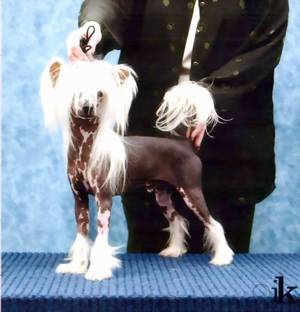
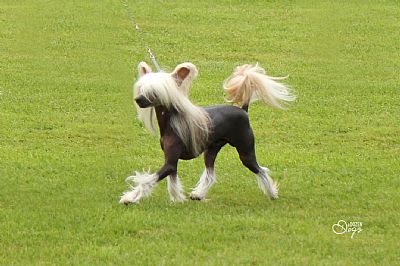
CHINESE CRESTED DOGS      


Breed Health Commentary


 Koreke Kennels DNA Data Base 

Koreke Kennels Health Data Base 
All Koreke litters are Clear By Descent 

Reg.Name  DOB Test Result
Ch Tengra of Pughbear 4 December 2000

DNA Profile
prcdPRA

CLEAR
Ch Koreke Rongo Mareroa Purakau 29 March 2002 DNA Profile  
Ch Xioma Prince ODarkness 28 May 2001 prcdPRA CLEAR
Ch Koreke Tara Per Incurium 8 April 2005

DNA Profile
prcdPRA

CLEAR
Ch Nun of Tereiroa 23 July 1998 DNA Profile prcdPRA CLEAR
Atum of Tereiroa 23 July 1998 DNA Profile  
Ch Koreke Danu Nir Eire 19 Febuary 2003    CLEAR BY
DESCENT 
Ch Koreke Aoede Encore With Xioma 29 September 2005   CLEAR BY DESCENT
Ch Koreke Jubilare Bai Hu With Xioma 9 Feburary 2005   CLEAR BY DESCENT
Ch Koreke Jubilare Xuan Wu With Xioma 9 Feburary 2005   CLEAR BY DESCENT
Ch Koreke Midgard Idun 2 June 2004   CLEAR BY DESCENT
Ch Xioma Witches Brew 30 May 2004   CLEAR BY DESCENT
Koreke Visio Of Deus With Xioma


31 January 2008


  CLEAR BY DESCENT
Koreke Nerus Stella Maris 1 January 2007   CLEAR BY DESCENT
Ch Koreke Vulcan Fire OMagi

14 September
2006

  CLEAR BY DESCENT
Koreke Temestas Raijin With Xioma 16 Febuary 2008   CLEAR BY DESCENT
Ch Xioma Dragon Of The Smoke 7 March 2005   CLEAR BY DESCENT


Crested Genetics 

By Susan Whitman (with permission)

In general, we think 'dominant" means to dominate, and  "ressessive" means to be "dominated".

In genetics, a "recessive" does not carry the both HL and PP copies of the gene, only the PP. When a recessive is bred to a recessive, both will contribute the SAME PP gene so all resulting puppies will be PP. So in this case, "the recessive", which is the PP dog, does not have a HL copy of the gene, at all. and when bred to another PP, neither parents can give the HL gene to a puppy to MAKE a HL puppy. And the PP puppy they WILL ALWAYS produce, does not have a HL gene to transmit to produce, either. However, the HL Puppy with a PP parent has both the HL and PP gene, and bred to a HL with both HL AND PP gene (as all do have, as far as we know), the puppies (from 2 HL) can be either HL or PP, depending on whether that individual puppy inherited the HL gene or the PP gene from which ever of it's parents.*

PRO POWDERPUFF OR ANTI CRESTED?  

 By Amy Fernandez (with permission)  

In recent years much has been written in favour to the powderpuff. Information on the genetics of hairlessness is available to anyone interested on pursuing the subject. Greater understanding of genetic principles has led to increased acceptance and appreciation of this coated variety. We have cone a long way since the time when powderpuffs were looked upon as a throwback to mixed breeding and culling was the solution of choice. This shift in thinking has been reflected in the improvements that the breed has undergone in the last 20 years. We have managed to progress beyond a narrow viewpoint and powderpuffs are now considered a vital element in most Chinese Crested breeding programs. Bit can you have too much of a good thing? 


A lesson in genetics is not the purpose of this article but a slight review will bring us quickly to my main point. The hairless gene is generally believed to be a dominant lethal (HH), therefore all viable hairless are obligate heterozygotes (Hh). The recessive expression of the gene (hh) will result in coated progeny ie. Powderpuffs. 

Bearing this in mind simple logic tells us that the viable hairless is in a tenuous genetic position. HH or hh and you are out of luck. This is a delicate phenomenon which must be protected in order to be perpetuated. Do not expect natural selection to lend a hand in the production of Chinese Cresteds! The breed has survived though the recognition of and dedication to breed type = hairlessness.

 There are a number of Chinese Crested breeding programs on record which have practiced strict culling of all powderpuffs for over 10 generations in hopes of eliminating this less desirable variety. These attempts have been in vain for the laws of genetics do not allow for the elimination of the powderpuff. But is the reverse true? Unfortunately our highly desirable hairless variety can permanently disappear in just one generation.

I question the motives of breeders who promote the practice of breeding powderpuffs to powderpuffs. I cannot imagine a more useless direction for a breeding program, to take. Such a course not only ignores the genetic reality of this breed but displays a total lack of interest in furthering the refinement of breed type. Exactly how is this going to “improve the hairless gene” if it is not even present in the breeding? You might as well mat a pair of poodles in hopes of improving Chinese Crested’. I’ve yet to hear a reasonable defence of this practice yet it is becoming more widespread.

 Of course this is the extreme of a general trend which is taking place in many breeding programs. Much more prevalent and possibly more destructive is the mistaken belief that every powderpuff has a valuable genetic contribution to make to the breed Whether through ignorance, greed, or just irresponsible breeding a great number of poor quality powderpuffs are now being introduced into the breed. Since they are definition lacking in the most essential element of the breed type – hairlessness, only the most exceptional specimens should merit inclusion in a breeding program. Strangely many breeders seem to have lost all grasp of the principles of selective breeding over this issue.

 A faulty dog will contribute faults to the breed. Because the dog is a powderpuff should not be interpreted as a reason to overlook or excuse inherent faults. Powderpuffs cannot impart any elusive virtues to a breeding program, only strict selection can accomplish this.

 The fact that the occasional inclusion of a powderpuff is beneficial to an all hairless line does not mean that all powderpuffs are worth breeding. A structural; fault which may appear frighteningly drastic in a hairless crested may go virtually unnoticed when covered by a full coat of hair. A powderpuff with loose elbows, straight shoulders, or cow hocks is not going to bring much improvement in confirmation. It is nothing short of ludicrous to breed to a powderpuff with missing teeth or a bad bite in hopes of seeing better dentition in the offspring.

 The popular argument of “powderpuffs are cute, nice pets, or sell easily” should be discarded by any serious breeder. This is precisely the vein of thinking that will send this breed on the fast track to the puppy mills.

 Part of this problem may be attributed to the fact that a number of breeders seem to be without any concept of the look of this breed. The Chinese Crested is an outline breed; clean, elegant lines make the Chinese Crested what it is. For those who have a problem reconciling themselves to the look there are many other breeds to choose from. But please refrain from trying to turn the Crested into something it is not.

 Today’s breeders may look back on the wholesale culling of powderpuffs as an atrocity but I am sure that many of yesterday’s breeders would view the current trend of powderpuff to powderpuff breeding s with equal horror. Hairlessness is what this breed is about an to deny that fact is to do irreparable damage. 
 

Why it is the  POLICY of our KENNELS to DE -SEX  PUPPIES & OLDER DOGS

BEFORE they go to their new homes


De-sexing a male dog is a quick operation. It involves removing the testicles that produce the male hormone testosterone. Once done, dogs are often less likely to roam and less likely to be aggressive towards other male dogs.  


If a female is spayed before her first heat (at about 6-8 months old) it will decrease the chances of her developing mammary tumors in the future.  


Hemorrhagic gastroenteritis in dogs
Hemorrhagic gastroenteritis, HGE  

Affected Animals:
Dogs of all ages and breeds can be affected by hemorrhagic gastroenteritis. Young adult dogs of toy and miniature breeds, especially schnauzers and poodles, may be affected more frequently.

Overview:

There are many causes for bloody diarrhea and vomiting in dogs. Hemorrhagic gastroenteritis, or HGE, refers to a specific syndrome usually seen in young adult dogs of the toy and miniature breeds. In HGE, fever is usually not present, and the main laboratory abnormality is a marked elevation of the hematocrit (concentration of blood cells) due to fluid shifts and intestinal fluid loss. There is no diagnostic test that confirms the presence of HGE. Its diagnosis is made mainly on clinical grounds.

 Just as there is no unique diagnostic test for HGE, there is no established cause for the illness. Treatment is similar as that for other causes of vomiting and bloody diarrhea in dogs. However, relatively large amounts of fluid are usually needed to replace the fluid lost into the intestinal tract, and to reverse shock, if present. Antibiotics are also given because bacteria may play a role in causing HGE. Although the signs are sudden and severe, and some dogs do not survive, most animals with HGE recover fully with prompt treatment. Recurrences are possible in an individual dog, but they are not common. Prompt veterinary attention is vital for any dog with severe gastrointestinal signs and depression, whether due to HGE or other causes.

Clinical Signs:
The clinical signs of hemorrhagic gastroenteritis include vomiting, bloody diarrhea, depression, and collapse, or shock.

Symptoms:
See Clinical Signs.

Description:
Canine hemorrhagic gastroenteritis, or HGE, is a syndrome characterized by the sudden onset of vomiting, bloody diarrhea, depression, and an elevated hematocrit on bloodwork. The etiology, or cause, of HGE is not known. Changes in the mucosa, or lining tissue, of the intestine result in fluid shifts from the vascular system and changes in fluid secretion into the intestinal tract. These changes appear to cause the symptoms of HGE. Animals can become extremely ill in a very short period of time. Small and toy breed dogs from two to four years of age are affected most commonly. There is no specific diagnostic test for HGE, but the occurrence of severe bloody diarrhea in a dog with an elevated hematocrit, a normal white blood cell count, and no fever, strongly suggests its presence.

 Treatment requires prompt and aggressive fluid administration, and shock-level doses are usually needed at first. Food and water are withheld until the vomiting and diarrhea resolve. Steroids are given to animals that are in shock, and dogs with severe blood loss may require blood transfusion. Antibiotics are also given as part of the supportive treatment for HGE. Most dogs recover with appropriate treatment, although some may have additional bouts of the same signs after the initial episode resolves.

Diagnosis:
The diagnosis of hemorrhagic gastroenteritis usually rests on the presence of severe diarrhea in a dog with an elevated hematocrit. The elevated hematocrit results from fluid shifts out of the blood vessels, and excessive fluid loss through the intestinal tract. Additional bloodwork and x-rays are helpful for excluding other causes of bloody diarrhea, as is testing of the feces for the presence of parvovirus.

Prognosis:
With prompt and aggressive treatment, most dogs with HGE recover completely. Occasionally, some dogs will have recurrent episodes.

Transmission or Cause:
The cause of hemorrhagic gastroenteritis is unknown. A bacterium called Clostridium perfringens has been isolated from cultures of intestinal contents in dogs with HGE, but its exact role in the syndrome has not been identified.

Treatment:
The main aspect of treatment for HGE is intravenous fluid replacement. Large doses of fluids are usually required for initial therapy. Fluids are continued for one to two days, as long as the diarrhea persists. Antibiotics are also used because of the potential role of bacteria in the development of HGE. Steroids may be administered if the affected dog is in shock. Blood transfusions may be needed if blood loss is severe. Food and water are withheld until vomiting and diarrhea subside. These treatments are similar to those for almost any cause of acute, severe diarrhea in dogs. HGE symptoms should improve within 24 to 48 hours. If the affected dog fails to improve after 48 hours, other causes of the symptoms should be considered.

Prevention:
Since the cause of HGE is not completely understood, at present no known preventive measures exist.


Contact Details
Jeanette Bryce & Bernard Cherry
Christchurch, NEW ZEALAND
Phone : 03 3294 318
Email : koreke@actrix.co.nz

Dogz Online - Dogs, Breeders, Puppies